Performance & Reliability: Kits are engineered for improved handling, load capacity, and stability both on and off-road, with options for heavy-duty, comfort, and adjustable lift needs.
Expert Installation with Click & Fit: Professional lift kit installation is available nationwide with free after-service care for peace of mind.
Custom Fit for Every 4WD: An online suspension search tool helps drivers select the best suspension lift kit based on vehicle model, year, and usage.
Warranty & Support: All Formula 4x4 suspension lift kits come with a 5-year / unlimited km warranty, backed by decades of suspension expertise.
Fulcrum Suspensions offers suspension upgrades designed to improve vehicle capability across touring, off-road driving and heavy-duty use.
4x4 lift kits designed to increase ground clearance and improve off-road capability
Shock absorbers engineered to improve ride control and suspension stability
Leaf springs built to support vehicles carrying equipment or towing loads
Coil springs designed to maintain ride height and improve suspension articulation
Suspension bushes used to reduce vibration and maintain suspension alignment
Struts designed to support front suspension movement and steering stability
Fulcrum Suspensions also offers options for drivers looking for a 2 inch lift kit, a 3 inch lift kit or a complete suspension lift kit suited to their vehicle and driving requirements. Our 4x4 suspension suits many makes and models including:
Upgrade Your 4WD with Premium 4x4 suspension lift kits
At Fulcrum Suspensions, we offer a comprehensive range of 4wd suspension lift kits designed to enhance your vehicle's performance and handling. Our 4x4 lift kits are built to tackle the toughest terrains, ensuring your 4WD is ready for any adventure. Search for your car above and upgrade your 4WD with one of our 4x4 lift kits. Built to tackle your next adventure! We have a great range of lift kits depending on your vehicle and application.
Entry Level 4x4 lift kits & Premium 4WD Lift Kits, we specialise in all 4WD Suspension.
Explore Our Extensive Range of 4x4 suspension lift kits
Performance and Durability: Our 4x4 suspension lift kits are engineered to provide superior performance and durability. Designed for Australian conditions, they offer improved handling, stability, and comfort both on and off-road.
Customisation: Use our 4x4 suspension filter to find the best-suited lift kit for your 4WD. Select your vehicle model, year, and series to see the most appropriate options based on your driving needs.
Expert Installation: Get your 4x4 lift kits installed by our suspension specialists. We offer a Click + Fit serviceto ensure your lift kit is installed correctly and efficiently, providing you with peace of mind and excellent after-service care.
Get Ready for Your Next Off-Road Adventure
Enhance your 4WD’s capabilities with our high-quality 4x4 suspension lift kits. Our kits are perfect for those looking to gain height, fit bigger tires, increase load-carrying capacity, and improve on and off-road handling. Contact our 4x4 suspension experts today to find the best lift kit for your vehicle.
4x4 suspension Brands We Trust
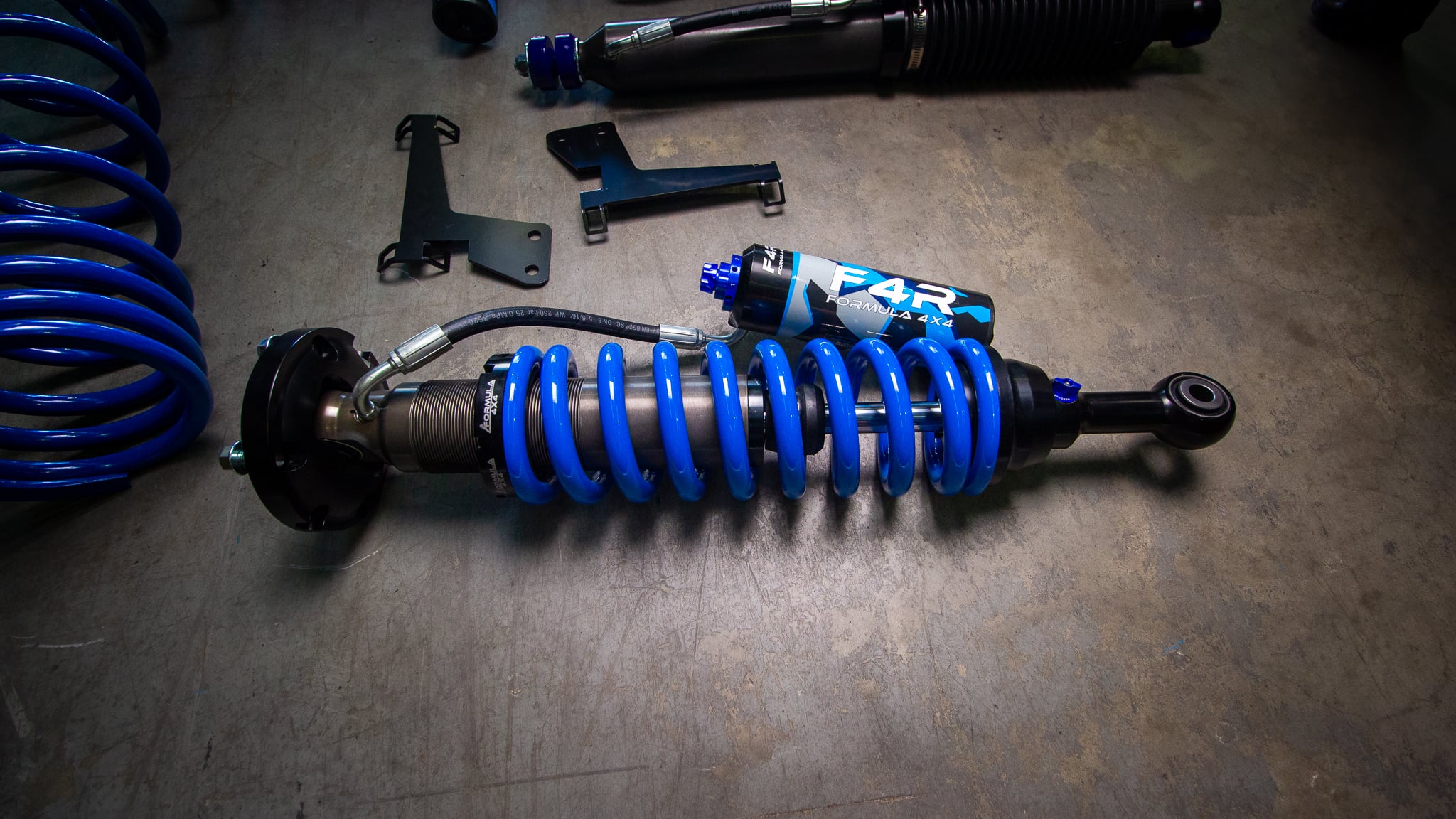
Formula 4x4 lift kits: Designed for comfort and stability, these lift kits are tested in Australia’s harshest conditions to ensure maximum performance.
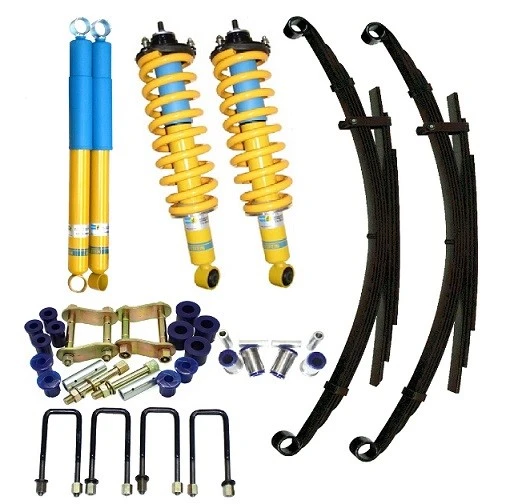
Bilstein lift kits: Known for their performance and reliability, Bilstein lift kits include shock absorbers engineered for Australian 4x4 driving conditions.
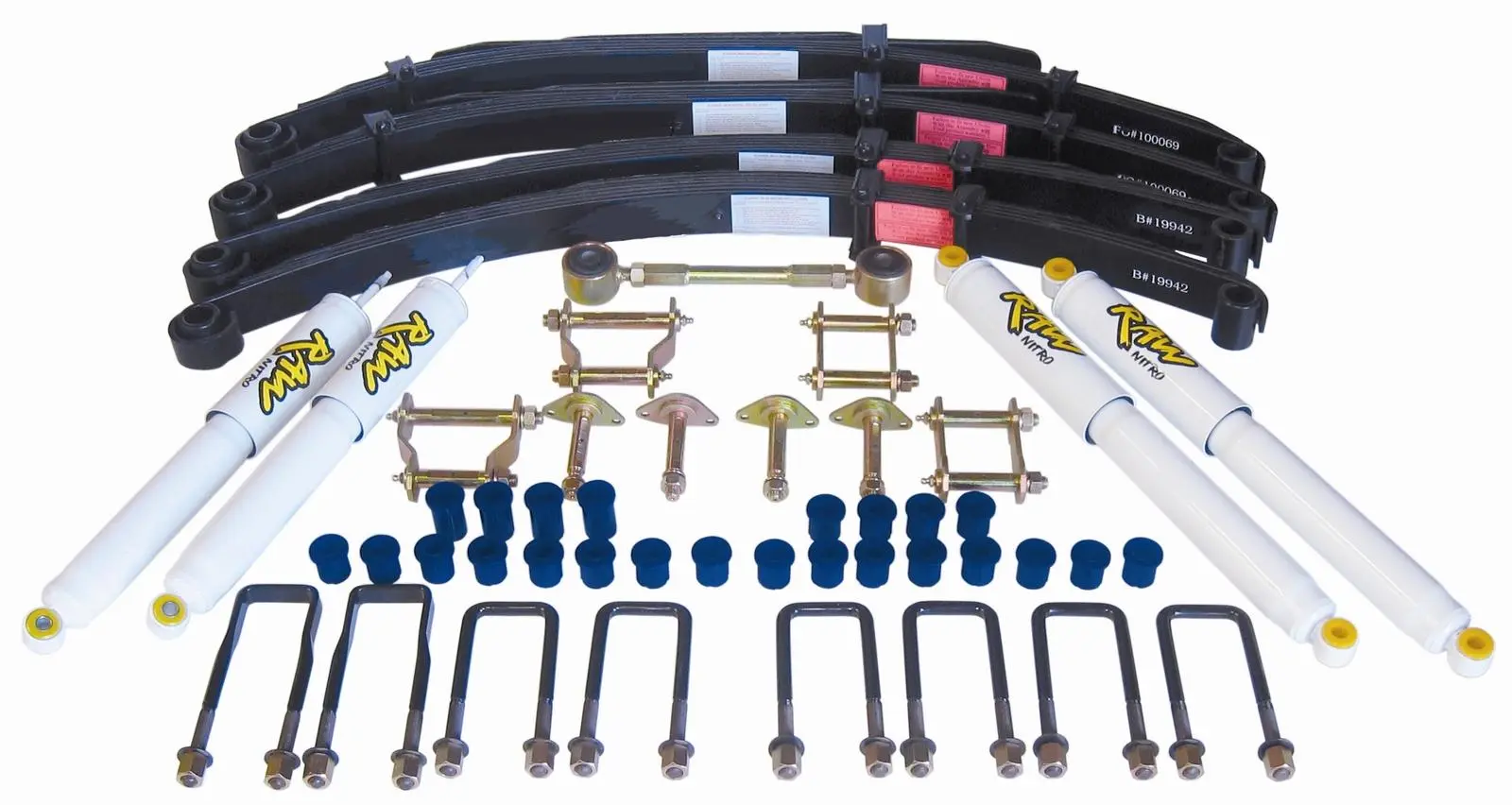
Raw lift kits: Ideal for heavy-duty applications, Raw lift kit is perfect for vehicles carrying constant heavy loads.
Koni 4x4 lift kits: Trusted by Dakar rally racers, Koni lift kits offer exceptional stability and road-holding grip under extreme conditions.
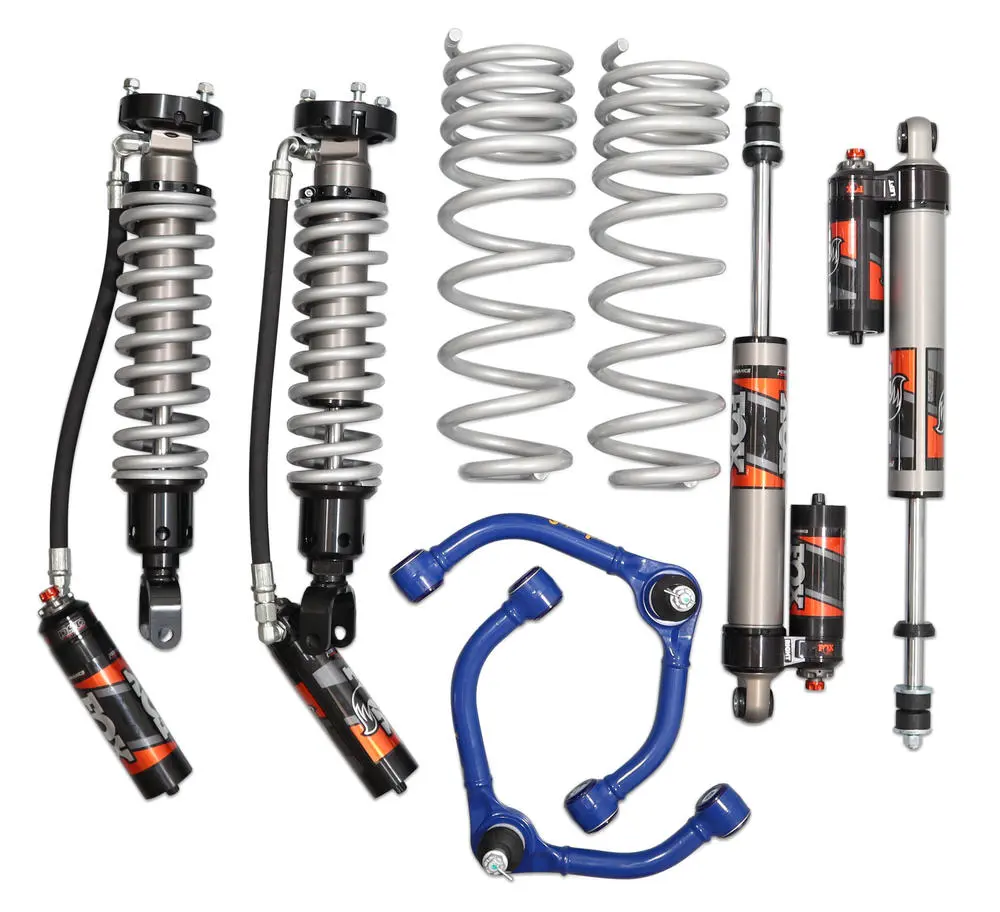
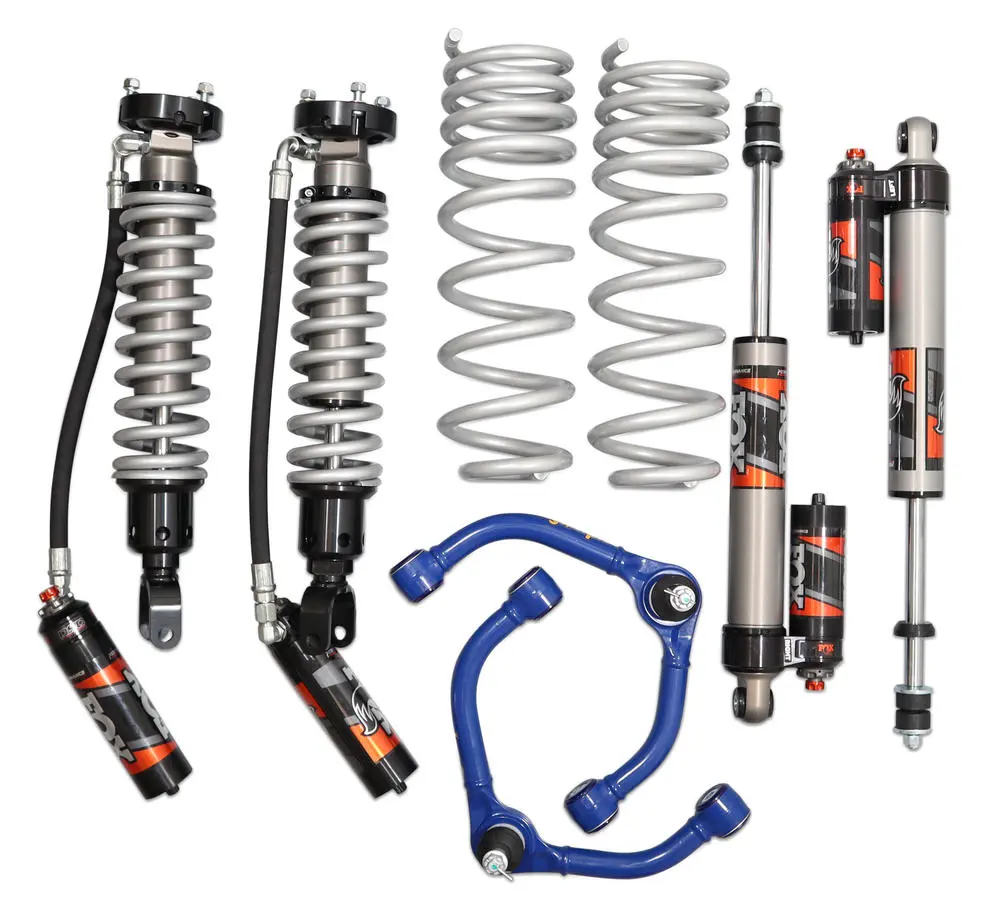
Fox 4x4 Lift Kits: Known for premium off road suspension, Fox lift kits deliver race-proven technology with adjustable options for maximum performance and durability.
Find Your Perfect 4WD Suspension Solution
At Fulcrum Suspensions, we are dedicated to providing the best 4WD suspension solutions. Explore our range of 4x4 lift kits and find the perfect upgrade for your vehicle. Use our online suspension filter tool, visit one of our store locations, or contact us for expert advice.
Experience the Fulcrum Advantage
Upgrade your 4WD with confidence. Our Australian-made 4x4 suspension lift kits are backed by a warranty up to 5 year / unlimited kilometers, ensuring quality and reliability. Choose Fulcrum Suspensions for your next lift kit and experience the ultimate in off-road performance and durability.
4WD suspension lift kits
Supercharge your off-road experience with our premium 4wd suspension lift kits. Designed to handle the toughest terrains, our 4x4 suspension solutions ensure your vehicle is ready for any challenge. With decades of expertise, Fulcrum Suspensions provides top-tier products tailored to meet your needs, ensuring excellent performance and reliability.
Benefits of 4wd suspension kits
A 4WD suspension lift kit offers numerous advantages. Enhanced ground clearance allows you to tackle rocks, mud, and other obstacles effortlessly. Superior off-road performance means your 4WD can conquer tougher terrains with improved traction and stability. Additionally, a lifted 4x4 not only functions better but also boast a more rugged and adventurous appearance.
Types of 4x4 suspension lift kits
Fulcrum Suspensions offers a range of 4x4 lift kits to suit various preferences and requirements.
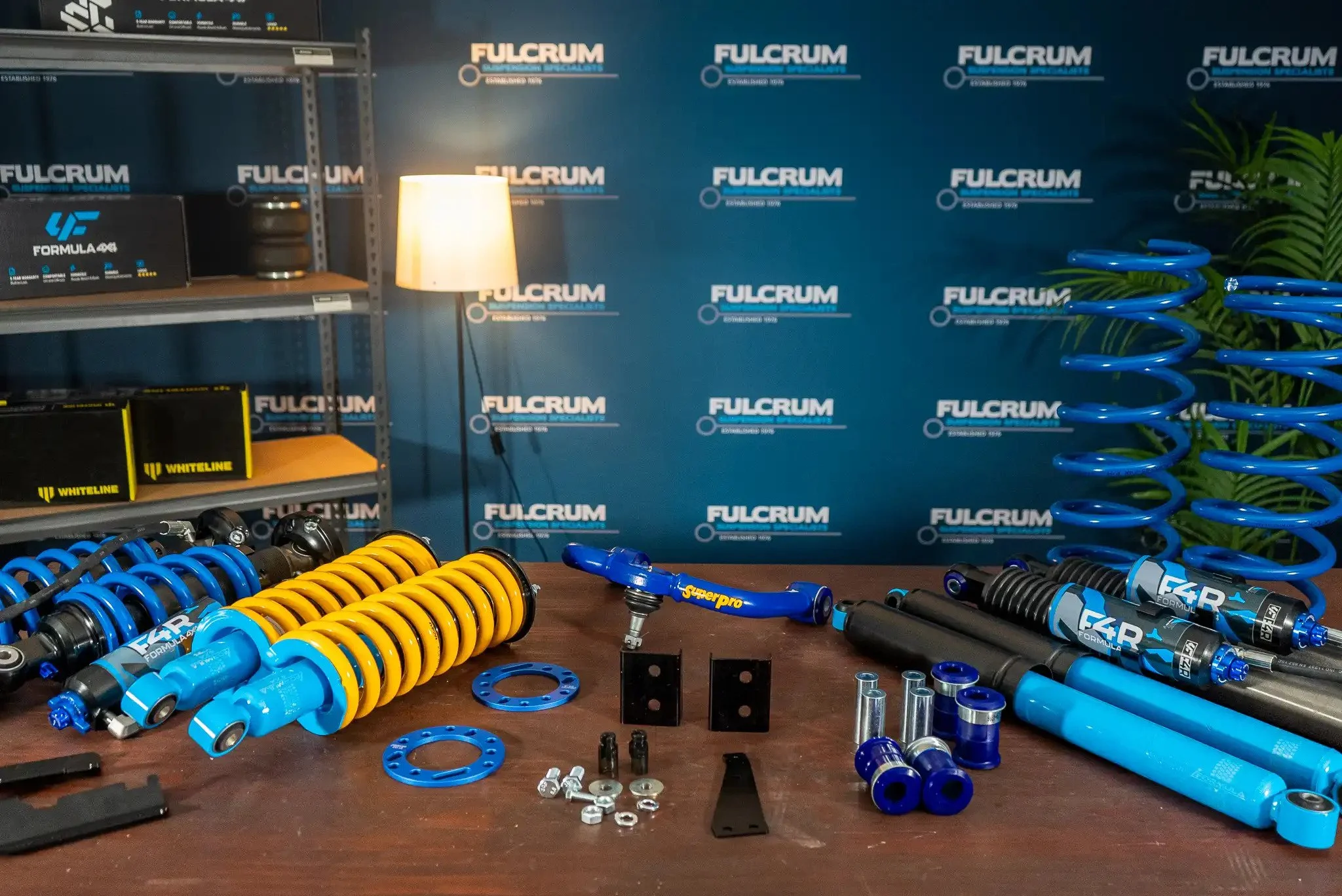
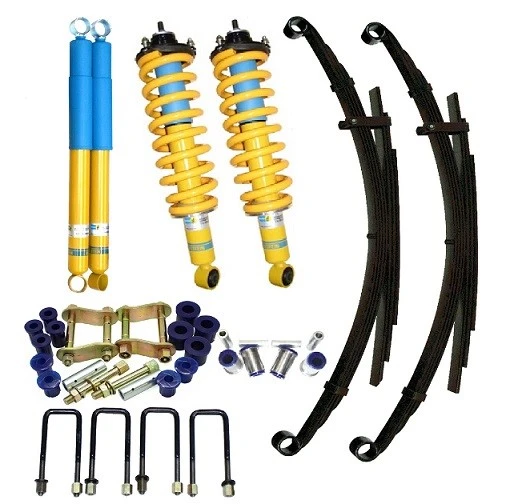
Complete lift kits include all necessary components, such as springs, shocks, and hardware, providing a thorough solution for lifting your vehicle.
Spacer lift kits are a budget-friendly choice, using spacers to achieve the desired height without replacing existing suspension parts.
Custom lift kits cater to specific needs, ensuring the perfect fit and performance for your 4WD.
Whether you need a moderate lift for weekend adventures or a more substantial lift for extreme off-roading, we have a kit that suits your needs.
Our suspension specialists can install your 4x4 lift kit directly when you order online, with FREE after-service care included.
Choose from our leading range of Bilstein, Fox, Formula 4x4, Raw, and SuperPro 4x4 spacer kits (Easy lift kits), all designed and tested for Australian conditions.
Whether you’re tackling the Outback, touring long distances, or driving on the beach, our 4x4 suspension lift kits give your vehicle the height, control, and stability it needs.
Built to handle constant heavy loads, towing, and off-road driving
Engineered for maximum comfort and control on and off-road
Designed to lift your 4x4 to the legal maximum height for bigger tyres and better clearance
Use our 4x4 suspension search tool to find the perfect kit for your vehicle model, year, and series. We have 4x4 lift kits and suspension for many makes and models including:
Fulcrum Suspensions offers suspension upgrades backed by clear warranty support, giving drivers added confidence when choosing the right setup for their vehicle. Warranty cover varies by brand, with each option supported according to the product range and intended use.
SuperPro: Lifetime warranty
Formula 4x4: 5 Year / Unlimited Kilometre Warranty
Bilstein: 3 Year / 60,000 Kilometre Warranty
RAW 4x4: 2 Year / 30,000 Kilometre Warranty
FOX: 1 Year / Limited Kilometre Warranty
All other lift kits: 12 Month / 20,000 Kilometre Warranty
Why Choose Fulcrum Suspensions for Your 4WD suspension kits?
Fulcrum Suspensions is dedicated to delivering high-quality 4wd suspension kits that enhance your vehicle's reliability and performance. With over 45 years in the industry, we possess the knowledge to provide superior suspension solutions. Our products have garnered praise from countless satisfied customers, reflecting our commitment to excellence. Our extensive product range and expertise ensure you receive the best possible service and support.
Installation and Support
Installing your 4x4 suspension lift kit is simple with Fulcrum Suspensions. With a network of over 200 installers, we ensure your lift kit is installed accurately and efficiently. Our extensive nationwide warranties and support network provide peace of mind, knowing help is available wherever you are in Australia. Our expert suspension specialists are always ready to offer advice and support, ensuring optimal performance from your lift kit. From the initial consultation to post-installation support, we are committed to your satisfaction.
Choosing the Right 4WD suspension lift kits
Selecting the ideal 4WD suspension lift kit is crucial for enhancing your vehicle's capabilities. Consider factors like the terrain you'll encounter, the load your vehicle will carry, and your specific performance requirements. Fulcrum Suspensions offers a variety of lift kits to match different needs and budgets, ensuring you find the perfect solution for your 4x4. Whether you need a complete lift kit, a spacer lift kit, or a custom setup, we have the right option for you. Consulting with our specialists can help you make an informed decision, ensuring your lift kit meets your expectations.
Maintaining Your Vehicle with 4x4 suspension lift kits
Regular upkeep of your lifted 4WD is important for its durability and performance. Frequently examine the suspension parts for any wear or damage, such as springs, shocks, and spacers. Schedule alignment checks and adjustments to ensure the vehicle handles well and tires wear evenly. Stick to routine maintenance, including oil changes and brake inspections. Keeping the suspension clean and lubricated prevents debris buildup and reduces wear on moving parts. Maintaining your 4WD properly ensures it delivers consistent performance and reliability, whether on or off the road, extending the life of your vehicle and enhancing your driving experience.
At Fulcrum Suspensions, we prioritise quality and service. Our 4wd suspension lift kits undergo rigorous testing to ensure they meet our high standards and can withstand the rigours of off-road driving. Choosing Fulcrum Suspensions means selecting a product built to last. Our team is dedicated to helping you achieve the best results from your lift kit, offering support and guidance every step of the way. We understand that each vehicle and driver has unique needs, and we are committed to providing tailored solutions that meet those needs.
If you aim to boost your 4x4's performance and appearance, our 4wd suspension lift kits are the perfect solution. Reach out to Fulcrum Suspensions today to discover more about our products and services and let us assist you in elevating your 4WD to new heights.
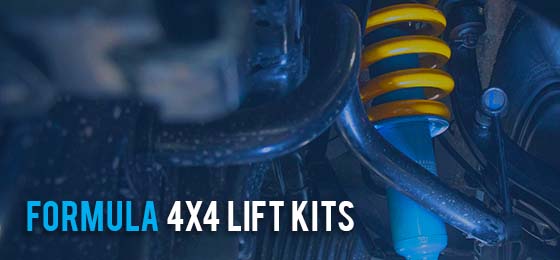
A Formula 4x4 lift kit provides improved ground clearance and stronger suspension travel across uneven terrain. The Formula 4x4 range was designed to improve your on and off-road experience, withstanding the harshest of conditions in the form of heat, corrugation, shock travel, and extreme driving changes. All to ensure reliability during your next outdoor adventure.
In Formula’s 2 inch and 3 inch lift kits are their shocks, engineered and tested in Australia and are built using high-quality materials to maximise performance and durability. These shock absorbers are paired with SupePro bushes, which are regarded as the best suspension bushes in the world.
A properly installed 4wd lift kit gives the vehicle the height, control and stability needed for real-world 4WD use, while also supporting accessories such as bull bars, canopies, roof racks and drawer systems.
Used by 4WD 24/7, our Formula lift kits have seen every corner of Australia. Performing to the highest standard, offering the 4WD 24/7 team a comfortable ride off and on-road whilst maintaining maximum driving stability. The guys at 4WD 24/7 are known for not treating their gear kindly, throwing our Formula lift kit at some of the harshest 4WDing tracks in the world. Without fail, our Formula lift kits have given them a true understanding of reliability earning their seal of approval.
For drivers wanting a practical 2 inch suspension lift kits for touring and daily use, Formula is one of the best choices available. For more serious off-road builds, Formula 4x4 also offers 3 inch suspension lift kits.
A Formula 4x4 lift is a complete upgrade package. With one of the largest teams of suspension engineers and technicians, Fulcrum has utilized all their technical experience in both the suspension and 4WD industry to bring to market the highest quality and best value for money 4x4 lift kits.
A Formula lift kit is a great option for any 4x4 enthusiast, tourer, or tradie. Upgrade your 4WD with a Formulalift kit to get an extremely comfortable ride and to maximize performance when off-road, on-road, or when carrying heavy loads.
Bilstein lift kits are designed, and engineered to be great for comfort 4WDing.. Our Bilstein lift kits include Bilstein shock absorbers which are designed and manufactured in Germany to the highest possible standard. Bilstein has gone the extra mile to ensure maximum performance off-road.
Their team in Australia has set out and designed a set of shock absorbers (B6, B8 & B60) specifically for Australian 4x4 driving conditions. We then evaluated each shock, tested them ourselves, and created the best possible lift kits, per each shock’s valve coding and performance.
Bilstein upgrades are used in a 4x4 lift kit designed to improve ride stability and vehicle control. Many vehicles equipped with Bilstein 4x4 lift kits benefit from stronger damping performance when travelling across uneven terrain.
We have teamed up with Bilstein, combining both of our company’s suspension experience to create a range of reliable, comfortable, yet heavy-duty 4x4 lift kits. Classed as a performance lift kit, Bilstein lift kits are designed to suit any vehicle load and any driving situation. Due to their valve coding, our Bilstein lift kits offer a degree of comfort.
Our Bilstein lift kit has been assembled by our research and development team in Australia, which have also been tested in the toughest Australian off-road conditions by both 4x4 enthusiasts and our experienced 4x4 suspension technicians.
A Bilstein lift kit is a great option for any 4x4 enthusiast or tradie. Upgrade your 4WD with a Bilstein lift kit to maximise performance when off-road, on-road, or when carrying heavy loads.
RAW 4x4 lift kits are designed for vehicles operating in demanding environments where durability and load support matter most. RAW lift kits are commonly used on work vehicles, commercial vehicles and touring vehicles carrying constant weight.
Powerdown, the owner and manufacturer of RAW 4x4, has been designing and developing heavy-duty shock absorbers for the Australian truck and trailer industry since 1983. Using their suspension knowledge, in 2005 the RAW 4x4 brand was created to design, develop and market heavy-duty shock absorbers specifically for 4WD applications.
We partnered with Powerdown to utilise their Raw shock absorbers to create a Raw lift kit. Using our experience and their RAW 4x4 shocks, we designed a lift kit that is best suited for heavy-duty and load applications. Due to the Raw lift kit valve coding, internal pressure, and component design. A RAW 4x4 shock offers far greater load-carrying capability at the cost of comfort.
Upgrade your 4WD with a Raw lift kit to improve the ride, handling, and load-carrying performance. Best suited for trade vehicles carrying constant heavy loads.
Get the Fulcrum 4x4 advantage by installing one of our Australian-assembled and tested 4x4 lift kits at any of our store locations. Increase your flex, driving capability, and your off-road and on-road vehicle traction.
Our Fox 4x4 lift kits are built for serious off-road enthusiasts who demand premium performance. Designed with race-proven technology, Fox shocks provide superior damping, durability, and control across the toughest terrains.
Fox shocks are widely regarded as some of the best 4x4 suspension lift kits in Australia, with advanced features like remote reservoirs and adjustable valving. This makes them ideal for drivers who want to fine-tune their 4wd suspension upgrades for both comfort and extreme off-road handling.
Engineered to withstand harsh Australian conditions, a Fox lift kit offers excellent stability, improved ride quality, and long-term reliability. Whether you’re tackling rugged tracks, sand dunes, or heavy towing, Fox suspension ensures your 4WD suspension parts deliver consistent performance.
Upgrade your vehicle with a Fox lift kit for maximum control and confidence on every adventure.
A lift kit is a matched suspension upgrade for a 4x4, designed to improve ride height, control and load support as a complete system rather than as individual parts. Depending on the vehicle, a lift kit can include shocks, struts, springs, along with supporting components such as bushings and the hardware needed to fit everything correctly.
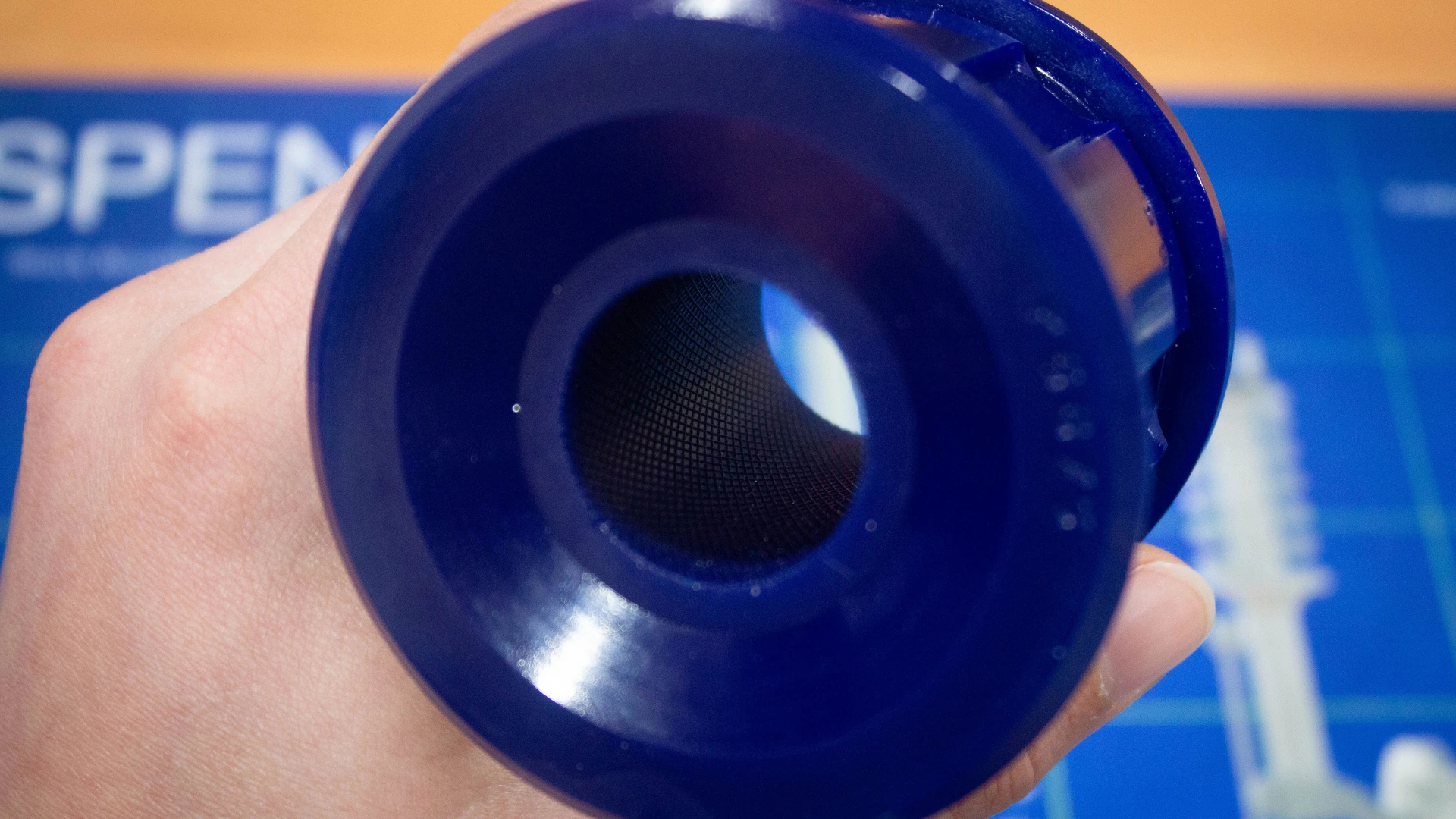
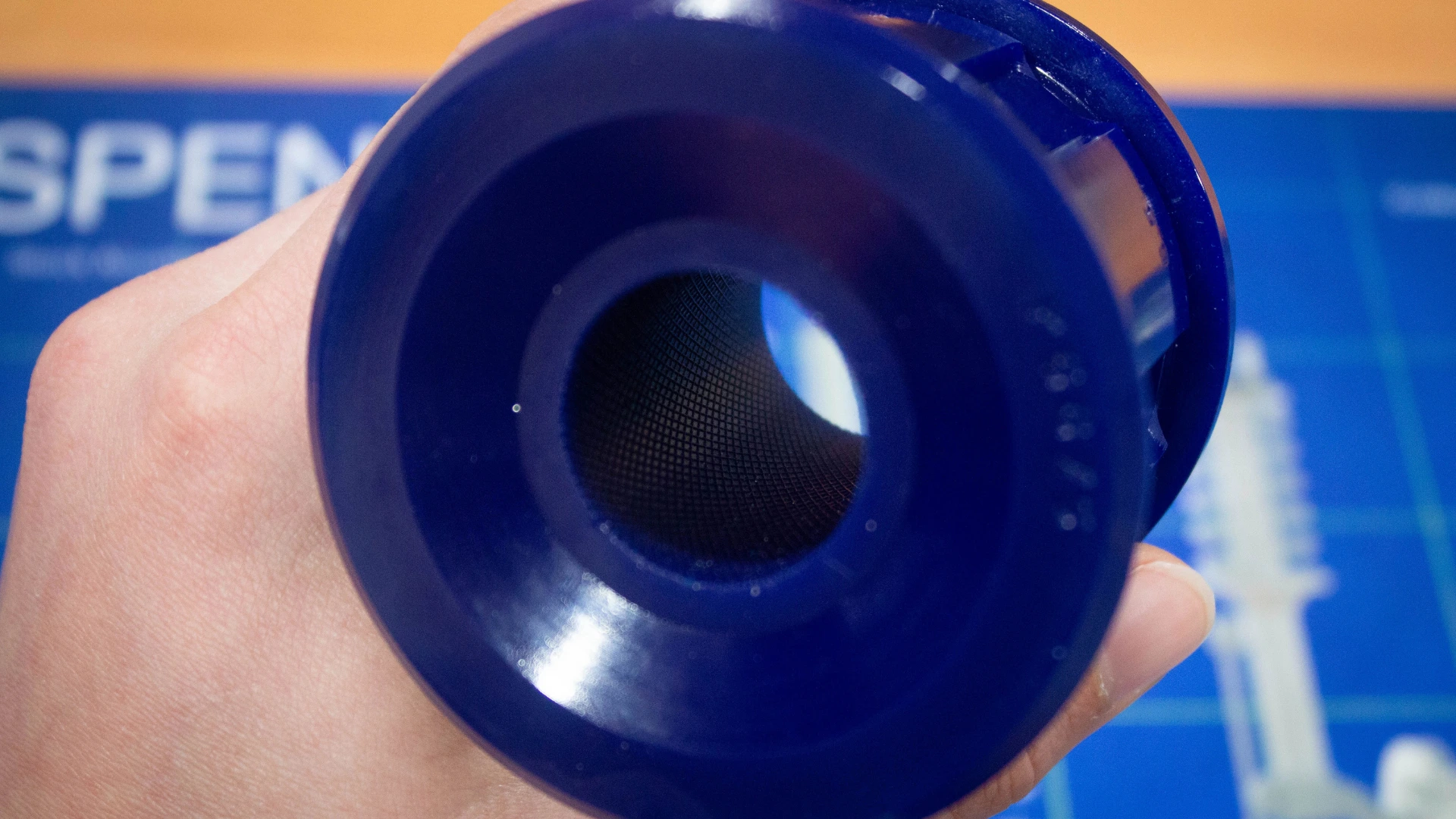
SuperPro Bushings are a leading name that is used throughout the world in a huge variety of motoring applications. So of course we would use nothing else and they are included in all our lift kits from Fulcrum Suspensions.
When combining world-leading designs with a lifetime warranty – there is no other choice!
Each of our lift kits includes SuperPro greaseable shackles, fixed pins, and bushes. Unlike SuperPro greaseable shackles, original shackles and fixed pins corrode and destroy bushings. With the ability to re-grease annoying squeaks, bushing failure is a thing of the past!
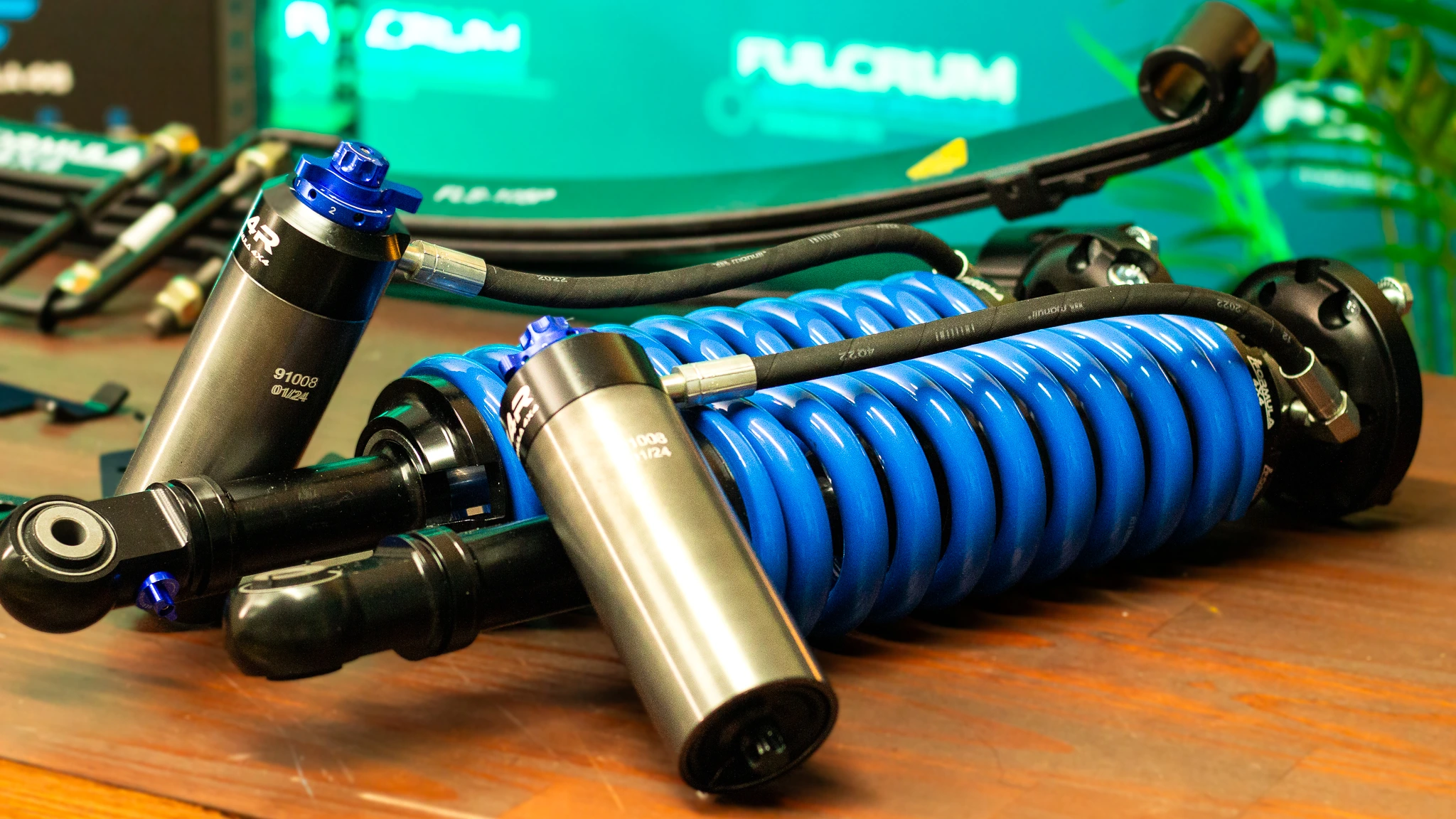
For 4x4 vehicles fitted with coil springs, we use nothing but the best! King Springs have been Australia’s leading manufacturer of springs in the aftermarket application for years and are used worldwide. With X5K high strength steel making the springs nearly 30% lighter and reducing the solid height and increasing travel, they are the perfect choice for your lift kit.
Made by Australians, for Australians! Engineered to tackle Australia’s harsh conditions, Formula leaf springs are perfect for trade vehicles, commercial vehicles, and 4WD enthusiasts.
Formula leaf springs are suited to carry a range of front and rear loads between 50 kg and 800 kg and 20 mm to 80 mm heights. Providing both comfort and heavy-duty leaf spring options incorporating a range of special features, ensuring you get the right ride for your 4WD.
We consider Bilstein to be one of the best manufacturers in the automotive aftermarket industry. Not only do they produce quality aftermarket shock absorbers, but they are now used by OE (Original Equipment) car manufacturers to produce OE shock absorbers for vehicles straight from the factory.
Throughout our Fulcrum Suspensions store network, we install Bilstein shock absorbers daily, either as a repair or upgrade solution. Our most popular suspension solution with Bilstein shock absorbers is in our custom assembled 4x4 lift kits.
The Formula 4x4 range was designed to improve your on and off-road driving experience by allowing your vehicle to withstand the harshest conditions, ensuring reliability on your next outdoor adventure. Built from high-grade carbon steel, Formula shock absorbers incorporate a specialised valving system, including high-quality temp oil, seals, and low gas pressure. Including already installed Australian-designed and manufactured SuperPro bushes, your 4WD will have the most comfortable and affordable road. Without lacking any shock features, Formula 4x4 is the complete package.
Raw 4x4 is one of Australia’s leading home-grown manufacturers and designers of 4x4 suspension components. With one of Australia’s most trusted ranges of 4x4 shock absorbers developed with state-of-the-art equipment in Aussie conditions, Raw 4x4 has been at the forefront of 4WD suspension for decades. Made in Australia for Australian conditions and vehicles, installing RAW 4x4 suspension will improve the ride handling and off-road ability of your 4WD.
SuperPro upper control arms are designed to correct front-end geometry on lifted vehicles where alignment angles can be pushed outside the ideal range. They help restore wheel alignment, maintain usable suspension travel and support more consistent steering performance after a suspension upgrade.
What makes SuperPro upper control arms different is their focus on both geometry correction and long-term durability. They are engineered to improve alignment on lifted 4WDs while also using SuperPro bushings designed to deliver stronger wear resistance, improved articulation and more reliable performance in demanding conditions.
Choosing the right suspension setup depends on how your vehicle is used. A touring build, a daily-driven ute, a towing vehicle and a heavily accessorised off-road setup can all require different suspension solutions, even when based on the same vehicle platform.
Fulcrum Suspensions specialists help drivers choose the right 4x4 lift kits and supporting components based on vehicle configuration, accessories and driving style.
Drivers can use the Fulcrum Suspensions search tool to find compatible 4x4 lift kits based on vehicle model, year and series.
Drivers searching for the best 4x4 lift kit often choose Fulcrum Suspensions because specialists can recommend the right components, explain the available brand options and organise professional installation through Fulcrum Suspensions workshops. Drivers looking beyond a complete kit can also shop for shocks, struts, bushings and other suspension components through Fulcrum Suspensions.
Looking for more information about 4x4 lift kits and suspension? Below we answer the most commonly asked questions.
What is the best brand of 4x4 suspension?
The best brand depends on the vehicle, the load it carries and how it is driven. For many Australian drivers, Formula 4x4 is one of the best choices because it balances comfort, control and heavy-duty capability. Fulcrum Suspensions also offers Bilstein, RAW, FOX, Koni, SuperPro and Whiteline for different needs.
What is the best 4x4 suspension?
The best 4x4 suspension is the setup that suits the vehicle, its load and how it is driven. For many drivers, Formula 4x4 is one of the best options because it balances comfort, control and heavy-duty capability. Many setups also use SuperPro components to improve durability and alignment stability.
What are the 4 types of suspension systems?
The four most common suspension types are leaf spring suspension, coil spring suspension, strut suspension and shock absorber-based suspension systems. In 4WD vehicles, leaf springs are often used for rear load support, while coil springs, shock absorbers and struts help manage ride quality and control.
How often should I replace my suspension?
There is no fixed replacement interval because suspension wear depends on road conditions, vehicle load and how the vehicle is used. If ride quality drops, steering feels less stable or the vehicle no longer sits correctly, it is a good time to inspect parts such as shock absorbers, coil springs, leaf springs and suspension bushes.
How many hours does it take to replace a suspension?
The time depends on the vehicle and the type of upgrade being installed. A basic suspension replacement can take a few hours, while a complete 4x4 lift kit with extra components can take longer. Fulcrum Suspensions can advise on installation time for the exact vehicle and setup.
How much does it cost for a new suspension?
The cost depends on the vehicle, brand and type of setup. As a general guide, lift kits usually cost around $1,500 to $3,000+, depending on the components included. The final price can also change if the vehicle needs extra parts or installation through Fulcrum Suspensions.
What is the difference between shocks and struts?
Shocks and struts both control suspension movement, but they are not the same part. Shock absorbers manage damping and reduce unwanted movement. Struts also support the suspension assembly and contribute to steering stability.
What are the different types of 4x4 shocks?
Different 4x4 shocks are designed for different uses. Some are built for comfort and touring, while others are designed for heavy-duty load carrying or stronger off-road performance. Fulcrum Suspensions offers shock absorbers from Formula 4x4, Bilstein, RAW, FOX and Koni.
How high can I legally lift my 4WD?
The legal lift height depends on the state or territory, the tyres fitted and the total height increase across the vehicle. Before fitting a lift kit, it is important to check the rules that apply to the vehicle and the intended setup.
Are lift kits legal in Australia?
Yes, lift kits can be legal in Australia, but legality depends on the total lift, the way the vehicle is modified and the rules in the state or territory where it is registered. It is always best to check the local requirements before fitting a lift kit.
What warranty do lift kits have from Fulcrum?
Lift kit warranty depends on the brand and the components included in the suspension upgrade.
SuperPro: Lifetime Warranty
Formula 4x4: 5 Year / Unlimited Kilometre Warranty
Bilstein: 3 Year / 60,000 Kilometre Warranty
RAW 4x4: 2 Year / 30,000 Kilometre Warranty
FOX: 1 Year / Limited Kilometre Warranty
All other lift kits: 12 Month / 20,000 Kilometre Warranty
What’s the point of a 2 inch lift?
A 2 inch lift is a practical upgrade for drivers who want more ground clearance, better tyre fitment and improved off-road capability while keeping the vehicle comfortable for daily driving and touring.
Is a 2 inch lift kit legal?
A 2 inch lift kit can be legal, but it still depends on the vehicle, the tyres fitted, the total lift and the rules in the state or territory where the vehicle is registered. It is best to check local requirements before installation.
Is a 3 inch lift legal in Australia?
A 3 inch lift may be legal in some cases, but it is more likely to require approval because it can push the vehicle beyond basic modification limits. Whether it is legal depends on the total lift, the vehicle and the state or territory rules.
Does a 3 inch lift make a difference?
Yes, a 3 inch lift can make a noticeable difference. It can provide more clearance, allow for larger tyres and improve off-road capability. It can also change handling and suspension geometry, which is why a 3 inch lift usually needs more careful setup than a smaller lift.
If you are using Internet Explorer to browse this website, you may get unexpected errors when viewing pages or purchasing products through our checkout.