Suspension FAQs and Information
How does car suspension work?
A cars suspension is a system which combines tires (tyres), springs, shock absorbers, sway bars, links, control arms t your vehicle. To give your vehicle traction on the road. Contrary to popular belief suspension is not built to give your car a smooth drive, this is an outcome of the suspensions job. Your cars suspensions main purpose is to keep your car firmly on the ground. Your cars suspension is built to keep the wheels firmly on the ground, to maximise tyre contact, patch and traction. Which is crucial for you cars braking, handling, stability and comfort all depend on tyre contact and tyre grip which is determined by size of tyre contact patch.
How much does it cost to repair suspension?
Depending on the type of suspension your car is running and the amount of use the car has seen will determine how much it will cost to repair your cars suspension. If you have looked after your car and treated it well while driving than you will only need to have standard replacement work done every so often but if you drive your car hard and not how it was meant to be. Than you should expect more parts to be repaired. We offer a free suspension check so you can determine the exact problem with your car and what it will take to fix it.
How do you know if your suspension needs to be repaired?
When driving if your car is making funny noises by your wheels, when turning or going over bumps than your suspension most likely needs to be repaired. WHen you are driving listen out for any odd squeaks or bumps in both the rear and front of your car. Check out our suspension service page which will help diagnose your suspension problem.
How do you know if your suspension is broken?
If your having difficulty driving, turning, steering straight are hearing any type of squeak or bump in the front/rear of the car than there is most likely something wrong with your cars suspension. Visit fulcrum suspensions for a free suspension check to determine what is wrong with your cars suspension.
What are some common suspension problems?
There are a few common suspension problems our workshop constantly see and fix straight away.
- Wheel alignment issues, customers steering is not aligned correctlly.
- OE rubber bushings are worn or broken and need to be replaced.
- Shock absorbers need to be revalved or replaced
- Wrong suspension component was installed and needs to be replaced
- A suspension component was installed and no wheel alignment was done
- New tyres where installed with no wheel alignment done
- Suspension was never inspected by a suspension specialist
- Illegal lift kits are installed on 4WDs
- The wrong lift kit springs have been installed onto a 4WD, messing up the vehicles ride height
How long does it take to fix a cars suspension?
Depending on the cars problem it can take anywhere from 1 hour to 5 hours,
What are the signs of a bad wheel alignment?
When a car is difficult to steer and visible tyre wear can be seen.
What happens if you don’t get a wheel alignment?
You car will be very hard to steering, turning may be delayed an not accurate and your tyres will wear very fast.
What is the best lift kit for my car?
We always say a 2 inch (50mm) lift is best for your car as it is the highest street legal lift kit you can have installed.
What Lift is the legal lift height for my 4WD?
2 Inches (50mm) is legal lift height for your 4WD.
What is a Illegal 4x4 Lift kit?
Anything over a 2 inch (50mm) lift.
When should I replace my suspension bushings?
You should replace your suspension bushings whenever you notice any extreme wear such as cracks. Most OE rubber bushes depending on use, last 3 years before needing to be replaced. We stock SuperPro polyurethane bushes which come with a lifetime warranty and are the perfect suspension bushing replacement.
When should I get a 4x4 lift kit?
Your looking for more flex, to carry heavy loads or install larger tyres than you will need to get a lift kit installed.
Do I really need a wheel alignment & suspension check?
Yes, a wheel alignment keeps your steering geometry in the correct position thus reducing tyre wear and overall saving you fuel in the process. Having a suspension check at the same time is recommended as this will highlight areas that could be of concern and giving you the opportunity to fix before costing a lot more. Remember, like an engine oil change a wheel alignment is a necessary service.
How often should I have a wheel alignment done?
We recommend about once every 12 months and you should get a suspension check or service done every 6 months, book a free suspension check with us today.
What are signs that I might need a wheel alignment & suspension check?
Often things like your steering wheel is on an angle to drive straight, your vehicle veering unexpectedly, rattling noises while going over bumps and shaking of the steering wheel are certainly guides to the potential requirements of a wheel alignment. With these signs as well a suspension check would be recommended to ensure that these signs are not caused by something potentially more dangerous.
How often should I get my power steering rack and pump checked?
At Fulcrum we recommend a power steering check and flush every 20,000km to optimise the life of your rack and pump system. The main reason people have power steering problems are due to a lack of maintenance.
Suspension Terminology
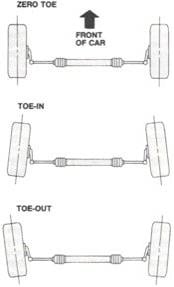
What is Toe in/Toe out?
What is Camber?
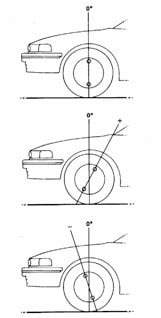
The inward or outward tilt of the top of the tyre as viewed from the top of the vehicle. A vehicle’s camber can be negative or positive depending on the vehicle manufacturer’s suspension design. Positive camber is when the wheels lean outwards (from a vertical line) at the top, when looking from the front or rear of the vehicle. Negative camber is when the wheel leans inwards at the top.

What is Caster?
The forward or rearward tilt angle of the steering axis, calculated by the line that runs through the upper and lower pivot. Caster can be negative or positive pending on the vehicle.